



 中文
中文 浙公网安备33010802014678号
 WeChat
 WeChat

 Timer chip
 OVP over and under voltage protection chip
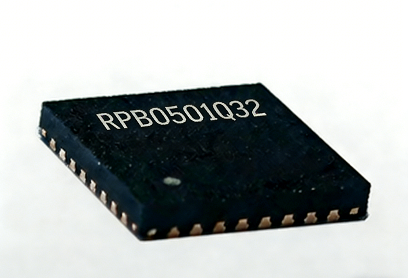 Leakage protection chip
Octopus Microelectronics was founded in 2019 and is headquartered in Hangzhou, with branches in Shanghai and Shenzhen. With 76% of its staff dedicated to R&D and having invested hundreds of millions of yuan in research and development, the company is a leading enterprise in the domestic smart lock chip and module field, committed to becoming a leader in the "sensing and computing integration" of smart modules.
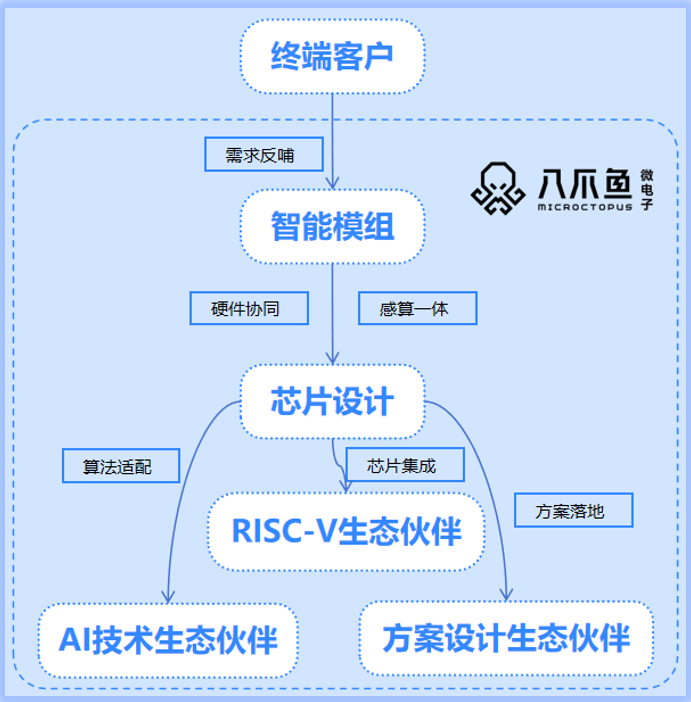
Octopus Microelectronics' future development direction for intelligent terminals will transcend the industry's framework of independent breakthroughs in single chips or algorithms, evolving towards a full-stack, systematic capability based on "technology integration + ecosystem collaboration." Under this trend, Octopus is building a core technology capability system centered on "integrated sensing and computing," which includes: sensor chips, computing chips, RISC-V-based control chips, and an algorithm stack covering multiple modalities such as fingerprint recognition, image recognition, and facial recognition. These capabilities are not isolated but are achieved through continuous integration of the "hardware-algorithm-module-platform" chain, achieving deep optimization at the system level. Integrated solutions are then provided to customers through modules and other forms, helping them lower development barriers and accelerate product innovation and iteration.
Among these capabilities, sensor chips are responsible for high-precision capture of physical quantities in the real world, forming the foundation of the perception layer; computing chips and control chips jointly undertake inference, scheduling, and edge processing tasks, providing support for algorithm operation; and algorithm capabilities are the core that differentiates user experience quality and determines product usability and intelligence. Octopus Microelectronics particularly emphasizes the synergistic optimization of traditional and AI algorithms, continuously training models in key scenarios such as fingerprint and facial recognition to improve pass rates and anti-interference capabilities. In the manufacturing of smart modules, Octopus Microelectronics has built a fully automated module production line, integrating chips and algorithms into modules such as fingerprint and facial recognition modules, providing customers with integrated solutions.
Regarding ecosystem development, Octopus is advancing a multi-layered ecosystem layout through an approach of "AI algorithms + AI perception + AI platform," collaborating with upstream and downstream manufacturers to create complete application scenarios such as smart door control, smart homes, and smart offices. For example, the company is working with mainstream lock manufacturers to define AI lock module standards, promoting the widespread application of algorithm capabilities on the terminal side; it is also collaborating with universities and research institutions to explore the potential applications of AI chips in emerging fields.
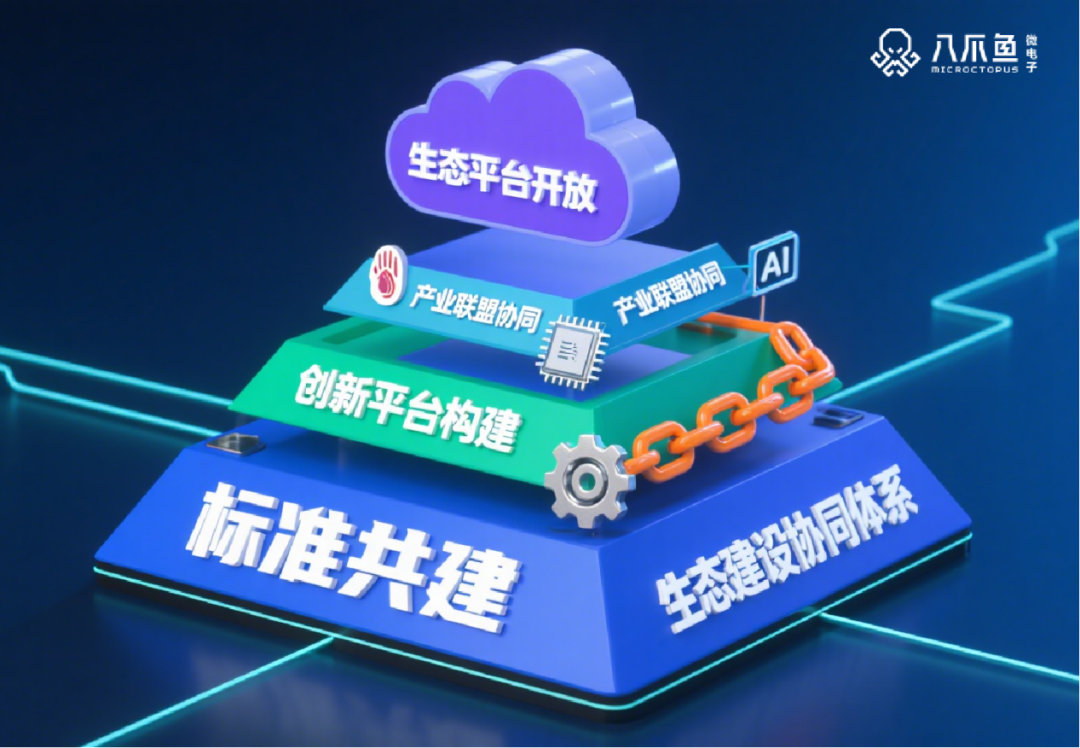
1. Standards Co-construction:
Octopus Microelectronics actively participates in the formulation of standards related to fingerprint recognition, computing equipment, and the RISC-V Industry Consortium, committed to standardizing general technologies and promoting industry standardization. By serving as a core member of multiple national and industry-level standards organizations, Octopus Microelectronics continuously enhances its technological influence and promotes the construction of a domestic technology system.
2. Innovation Platform Construction:
In collaboration with facial recognition and palm vein module manufacturers, AI algorithm vendors, and application vendors, Octopus Microelectronics integrates data, hardware, and algorithms to jointly build an intelligent recognition platform for the Chinese market and overseas trade scenarios. Through standardized interfaces and hardware-software collaboration mechanisms, the platform enables rapid deployment and application of multimodal identity recognition in finance, security, access control, and other fields.
3. Industry Alliance Collaboration:
In collaboration with chip manufacturers, module manufacturers, and ODM vendors, Octopus Microelectronics simultaneously develops low-power, highly stable, and low-cost intelligent module solutions, optimizing the stability and integration efficiency of complete machine systems and improving the stability of industry cooperation. Through vertical collaboration and horizontal integration, it achieves integrated collaborative development from chip to complete machine, significantly shortening the product cycle from R&D to market launch.
4. Open Ecosystem Platform:
Octopus Microelectronics opens its AI platform and RISC-V instruction set development environment, providing integration solutions for algorithm developers and hardware partners. By driving rapid innovation in the industry through efficient development processes, it attracts numerous university laboratories and startups to settle in, forming a diverse ecosystem centered on domestically produced chips and independent algorithms.
Furthermore, Octopus continuously optimizes the interpretability and transferability of its algorithm models. Through reinforcement learning and federated learning mechanisms, it achieves cross-device and cross-scenario adaptive capabilities, bringing customers a more stable and efficient intelligent experience. For B-end customers, the company provides one-stop technical and service support from chips and modules to complete systems, helping customers quickly build differentiated and competitive intelligent terminal products.
Building upon this technological system, Octopus believes that a single company cannot independently complete a closed loop of the entire product ecosystem. Therefore, it is essential to build a "platform-based" open ecosystem and collaborate with more excellent ecosystem partners. We welcome underlying technology companies (such as AI algorithm and advanced sensor manufacturers), solution companies (such as complete system design and system integrators), and terminal product companies (such as smart locks and consumer electronics) to join us in building a new generation of intelligent sensing platforms focused on "multimodal fusion + efficient integration."
The future market will no longer be a simple stacking of functions, but will place greater emphasis on "hardware and software integration," "algorithms as services," and "platforms as ecosystems." Whoever can provide a standardized, scalable, low-barrier, and highly flexible technological foundation will have the dominant power to drive innovation across the entire industry. This is precisely the direction that Octopus continues to invest in—building a foundational capability platform with technological integration capabilities and promoting the common growth of the industry through ecosystem collaboration.
400-880-2100 contact_us@rynova.cn
 Follow us
WeChat Official Account
Wechat
